
No Ego, Just Energy: Geometric Flux
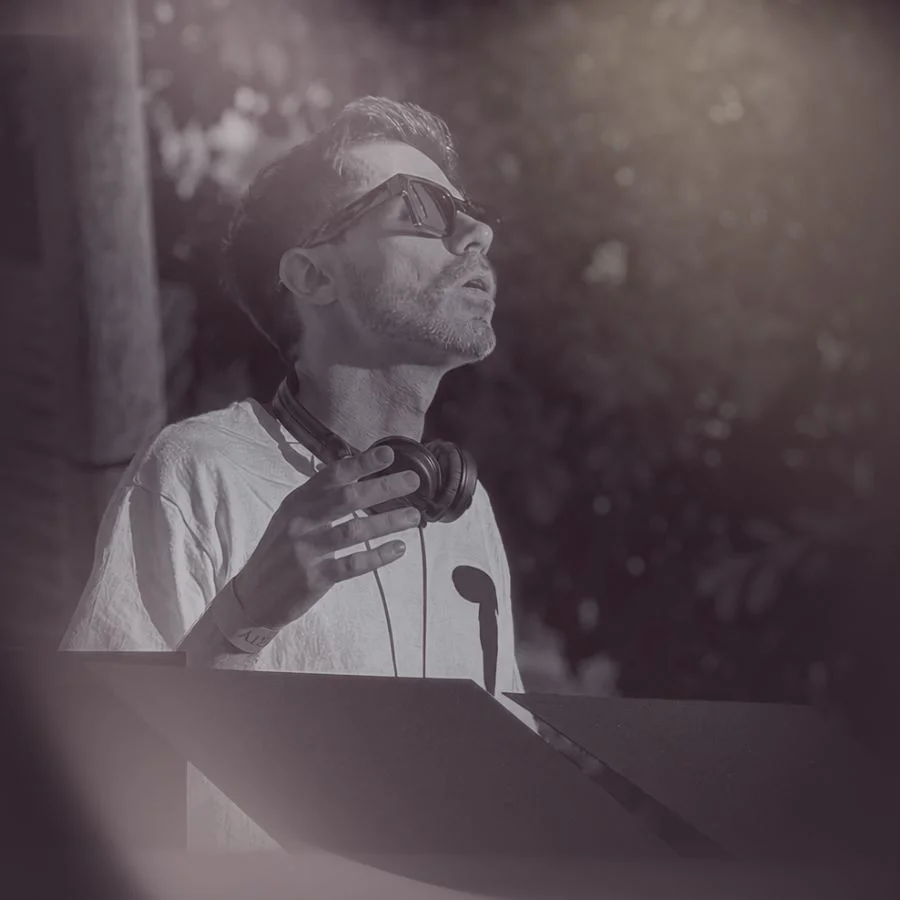
It happened at a warehouse party. The floor was packed, the sound system was doing exactly what it should, and somewhere behind the crowd, a man was sprinting from porta potty to porta potty with his arms full of toilet roll.
That man was Troy Evason, better known to many as Geometric Flux. For Gervais Martin, the owner and innovator behind BetaState, it was the moment something clicked. He already knew Troy as the trance DJ he used to book to close out the harder EDM nights at Sideshow. What he saw that night, though, showed him another side of someone he thought he knew.
Troy wasn’t on the clock as a toilet paper runner. He was a DJ, someone most people would associate with the music, the booth and the dancefloor. But somewhere along the way, he had noticed a problem and decided to do something about it.
No announcement. No fuss. No expectation of recognition. Just a person seeing what needed doing and getting on with it.
This month, we sat down with Gervais to unpack why that seemingly small moment stuck with him, what it says about Troy, and why the people who make a festival or party work are not always the ones standing behind the decks.
More Than Geometric Flux
Ask Gervais what Troy is best known for, and DJing is the obvious starting point. But it doesn’t take long for the conversation to move beyond the music.
As Geometric Flux, Troy has established himself in South Africa’s progressive and psychedelic electronic music scene. His sound leans into progressive trance, with a technical approach, rolling grooves and an organic influence that fits naturally into the outdoor environments where much of this music finds its home.
His work is closely associated with X7M Records, and his performances have taken him into the wider festival circuit, including appearances at international gatherings such as Universo Paralello in Brazil. He is also part of Tall Tales, the progressive psytrance project he shares with Cape Town musician Magnus Claussen, known as Itone.
That is already a fair amount to keep moving. But Troy’s contribution to the scene extends well beyond his own performances and productions.
He is also a driving force behind Habitat and Into the Wild Experience, projects that bring music and nature together through outdoor gatherings. More recently, the Sanctum name has become another part of that picture, offering a different setting for carefully selected techno and progressive psytrance lineups.
These are not simply different names on a poster. They represent different ways of bringing people together around electronic music, from outdoor festival experiences to more intimate, warehouse based gatherings.
For someone looking at Troy’s career from the outside, it would be easy to focus on the artist and the events attached to his name. But Gervais’s story points towards something less obvious: the person behind all of it.
Because for Troy, apparently, there is more to making an event work than making sure the music does.
Building Something Beyond the Booth
Habitat has grown into an established name on the Western Cape’s electronic music calendar, with events that bring together local artists, international guests and festival goers in natural settings. Events such as Among Mountains and Arcadian Forest have combined electronic music with camping and time outdoors, giving people a reason to spend a full weekend together rather than simply turn up for a set and head home.
Nature is an important part of that identity. The locations, the music and the opportunity to spend time away from the usual routine all contribute to the experience.
Troy’s own musical approach, with its progressive and psychedelic leanings and organic influences, sits comfortably alongside that direction. The connection between the artist and the event brand makes sense, but the work involved in bringing those experiences to life reaches far beyond selecting a lineup.
There are venues to consider, artists to coordinate, practical details to manage and the many small things that attendees might never notice when everything goes according to plan.
Then there is Sanctum.
Described as a pop up event brand, Sanctum focuses on tailored experiences rooted in techno and progressive psytrance. Its events have brought together artists including Geometric Flux, Ryan Hill, Itone and other established names from the local electronic music scene.
Where Habitat is strongly associated with outdoor gatherings and nature, Sanctum provides another space for electronic music to take centre stage. Different settings, different experiences, but both connected to the wider network of artists, organisers and music lovers who keep the scene moving.
It is worth recognising that these projects do not happen by accident. They require planning, relationships, time and a willingness to take responsibility for more than the part of the event that people see.
And that brings us back to the toilet paper.
New School Spirit, Old School Sensibilities
For Gervais, the moment with Troy brought into focus something he has observed throughout his time in the events industry.
In his view, older events were built around a shared understanding that everyone had a part to play in giving people a good time. Organisers looked out for one another, cleared the thorns from the pathways and communicated about dates and DJs. There was competition, naturally, but there was also a sense that everyone was contributing to something bigger than an individual event.
He describes it like a bus. Everyone used to climb aboard, making room for one another as best they could. Now, it can feel as though some people have secured their spot and are more interested in keeping others off than making space.
It is a perspective shaped by experience, and it raises a fair question about what happens when an industry becomes more concerned with visibility, status and the bottom line than the people who make it worthwhile.
The problem is not that events need to make money. They do. Artists need to be paid, suppliers need to cover their costs and organisers have plenty of practical responsibilities to keep on top of.
The issue is what gets lost when those responsibilities become the only things that matter.
Gervais points to the relationship between organisers and artists as one example. A DJ might receive a fee and a set time, but that does not necessarily mean the rest of the experience has been considered. Practical arrangements, communication, parking and somewhere to prepare before a performance can all make a difference.
Those details might not appear on a lineup poster, but they help determine whether the people behind the music feel supported.
They are the toilet paper rolls of the booth, if you will.
And while not every artist needs to become an event organiser, there is something valuable in recognising that everyone contributes to the experience in some way.
The People Who Make the Moment
This is where Troy’s actions meant so much to Gervais.
Here was someone who had built a reputation as an artist, helped develop established event brands and contributed to the wider electronic music community. Yet when something needed attention, none of those things seemed to matter.
He did not stop to consider whether the task was beneath him, whether it belonged to somebody else or whether anyone would notice. He simply got involved.
That does not mean every DJ should be expected to run around fixing every problem at an event. Organisers and venue teams have responsibilities of their own, and there is a difference between lending a hand and expecting people to compensate for poor planning.
But there is also a difference between understanding that an event is a shared experience and treating it as a collection of separate jobs.
Troy’s actions offered Gervais a reminder of the kind of attitude he believes the scene needs more of. Not because carrying toilet paper is some grand gesture, but because it reveals how someone approaches the people and spaces around them.
You can spend years talking about community, collaboration and looking after one another. Sometimes, it takes a much smaller action to show what those ideas actually mean.
For Gervais, that night was proof that the spirit he had come to love in the scene was still there.
Giving Credit Where It Is Due
There is a tendency in electronic music to measure a person’s contribution by what is easiest to see. The size of their following, the events they play, the lineups they curate or the brands they build.
Those things have their place. Artists deserve recognition for their music, and the people who create opportunities for others deserve credit for the work involved.
But the health of a scene also depends on the people who quietly take responsibility when something needs doing. The organisers who solve problems before attendees notice them. The crew who keep things running behind the scenes. The artists who understand that a good event is about more than their own set.
Troy’s work through Geometric Flux, Habitat and Sanctum gives us plenty to talk about musically. His involvement in the wider scene is equally worth recognising. Yet it was a simple act of helping out that reminded Gervais why those contributions matter in the first place.
And perhaps that is the point of the story.
You do not have to be the headliner, the promoter or the person with their name on the poster to make a difference to someone’s experience. Sometimes, all it takes is noticing that something is missing and deciding not to leave it for someone else.
So the next time you find a fresh roll of toilet paper waiting at a festival, spare a thought for the person who put it there.
They might never ask for the credit. They might not even tell you they did it.
But those little acts of care are part of what makes a gathering feel like a community, rather than just a crowd of people who happen to be listening to the same music.
And that is worth looking after.
LATEST NEWS


